



Share this article
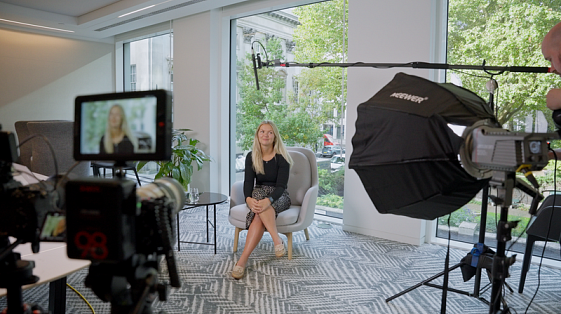

Most recruitment video projects start in the wrong place. The format gets decided before the problem is understood. The shoot gets booked before anyone has asked what a successful hire actually looks like. The result is polished content that nobody can prove worked, serving a brief that nobody really interrogated.
After thirteen years producing recruitment and employer brand content for HR, Talent Acquisition and Employer Brand teams across the UK, this is the pattern we encounter most often. And it is why so much recruitment video underperforms, not because the production was poor, but because the strategy behind it was never properly built.
This guide covers how to build a recruitment video strategy that works, from clarifying the hiring problem through to distributing content across the full recruitment funnel. It is practical, specific, and built around the kind of decisions that determine whether recruitment video improves hiring outcomes or just adds to the content library.
A recruitment video strategy is a structured plan for using video content to support specific hiring goals. It defines what perception you need to create with candidates, which types of content will create it, how those films will be distributed across the hiring funnel, and what a successful outcome looks like.
It is not a production brief. It is the thinking that should come before the production brief, and it determines whether the content you commission actually moves candidates from curious to confident to applying.
The distinction matters because most recruitment video briefs describe a format rather than a goal. "We need an EVP film" is not a strategy. "We are losing experienced engineers to competitors at the offer stage because candidates cannot visualise what the work actually involves, and we need content that closes that gap before the final interview" is a strategy. Everything that follows, who you film, what you ask, how you cut, where you distribute, flows from that level of clarity.
A well-built recruitment video strategy aligns four things: the specific hiring problem you are trying to solve, the candidate psychology driving that problem, the content types best positioned to address it, and the distribution channels where those candidates are most reachable.
Before any production decisions are made, the hiring challenge needs to be clearly defined. This sounds obvious. In practice it rarely happens, because the instinct is to move quickly from "we need recruitment video" to "let's book a shoot day."
The hiring problem shapes everything. There are three distinct challenges that recruitment video is commonly used to address, and each requires a different strategic response.
The organisation is not visible enough in the talent market, or the employer brand is not compelling enough to prompt action. Candidates are aware of the organisation but not motivated to apply. The content challenge here is awareness and desirability. Video needs to communicate what makes this organisation worth considering, usually through culture stories, team spotlights and leadership perspective that show candidates why this employer is worth their time.
Volume is adequate but too many applicants are misaligned with the role or the organisation. Interview time is wasted on candidates who would not have applied if they had understood what the role actually involves. The content challenge here is clarity and self-selection. Video needs to show the reality of the work, the team, and the expectations clearly enough that unsuitable candidates remove themselves before applying, while the right candidates feel more confident.
Strong candidates are making it through the process but declining offers or withdrawing late. This is often a trust or clarity problem at the decision stage. Candidates are not confident enough in what they are committing to. The content challenge here is conviction and human connection. Leadership messages, team culture films and honest accounts of what working there actually feels like can close the gap between interest and commitment.
Once the hiring problem is clear, the content types that address it become much easier to identify. These are the four most effective formats in a recruitment video strategy, what each one is for, and where each one fits in the hiring process.
The employer brand film, sometimes called an EVP film or culture video, is the foundational piece of any recruitment video strategy. It communicates what it feels like to work at the organisation at a level that goes beyond role descriptions and benefit lists. It should be specific enough to feel credible and human enough to feel real.
The most common mistake with employer brand films is treating them as brand advertising rather than as candidate communication. They are not designed to make the organisation look impressive. They are designed to make the right candidate think "that sounds like the kind of place I want to work" and make the wrong candidate think "that is probably not for me." Both outcomes are valuable.
An employer brand film typically lives on the careers page, LinkedIn company profile, and paid employer brand campaigns. It is the first thing a candidate sees and it sets every expectation that follows.
Role films address the clarity problem directly. They show what a specific job actually involves, who a candidate would work with, what the environment is like, and what success in the role looks like in practice. They are particularly effective for technical or specialist roles where candidates have specific concerns about the work itself.
The best role films are built around real employees talking honestly about what their work involves, supported by observational B-roll that shows rather than tells. They should never be scripted and they should never sanitise the reality of the role. Authenticity is the entire point.
Leadership films address the trust problem at the decision stage. Candidates who are seriously considering an organisation want to understand who they would ultimately be working for and whether that leadership is credible, human, and worth committing to.
The key to effective leadership interview films is getting leaders off their talking points. A leader reading from an approved list of employer brand messages is not a leadership film. A leader talking honestly about how the organisation has changed, what they have got wrong, and what they are genuinely trying to build is. The difference in impact is significant.
Culture films show how the organisation's values and ways of working show up in practice rather than in a policy document. They are particularly effective for early careers hiring, DEI initiatives, and any role where team fit and working environment are primary factors in the candidate's decision.
The best culture films are built around specific moments and specific people rather than general statements about what the organisation believes. "We believe in collaboration" is a claim. Two colleagues talking about a specific project they worked on together and what made it work is evidence. Evidence is always more convincing than claims.
Different content types serve different stages of the candidate journey. A recruitment video strategy that treats all content the same, and distributes everything everywhere, misses the opportunity to meet candidates with exactly the right message at exactly the right moment.
Employer brand film, culture stories, short social cutdowns. Goal: stop the scroll and prompt interest from candidates who did not know they were looking.
Role films, team spotlights, leadership interviews. Goal: give seriously interested candidates enough clarity and credibility to commit to applying.
Employee testimonials, leadership messages, culture stories. Goal: convert strong candidates who are deciding between offers by making the human case clearly.
One of the most practical implications of funnel mapping is that a single well-planned production day can create content for all three stages. An employer brand shoot that captures leadership interviews, team culture moments, and individual employee stories produces material for awareness, consideration, and decision stage use simultaneously. This is significantly more efficient than commissioning separate projects for each stage.
Where content will live determines how it needs to be made. This is one of the most consistently overlooked decisions in recruitment video production, and getting it wrong costs budget and produces content that looks compromised.
A 16:9 careers page hero film requires different framing, pacing and structure to a 15-second paid social ad with an opening hook. A 1:1 LinkedIn cut needs different composition to a 9:16 Instagram story. An internal all-hands version needs different framing to a public-facing campaign. These are not post-production problems. They are pre-production decisions that need to be made before the shoot is planned.
The questions to work through before any shoot is confirmed:
Answering these questions before a shot list is drafted means every frame captured on the shoot day is useful. Nothing gets left on the table in the edit because the edit was designed before production began.
These are the patterns that consistently undermine recruitment video, regardless of production quality.
A well-structured recruitment video strategy starts with a clear problem definition session before any production planning begins. This is not a creative briefing. It is a strategic conversation about hiring reality, candidate psychology, and the specific perception shifts that content needs to create.
From that conversation, the right content types become clear. The right contributors become identifiable. The distribution plan can be built before the shot list is written. And the edit can be structured around outcomes rather than around what looked good on the day.
The organisations that get the most from recruitment video are the ones that invest in this thinking before the camera is turned on. The ones that skip it tend to produce content they cannot prove worked, and commission something similar again the following year.
If you are planning a recruitment video project, the MHF Story-First Framework covers the strategic thinking that should precede any production brief in more detail.
A practical one-page checklist covering every decision that needs to be made before a recruitment video project begins. Useful for planning meetings, agency briefings, and internal sign-off.
We work with HR, Talent Acquisition and Employer Brand teams across the UK to plan and produce recruitment video content built around real hiring problems and real people. A discovery call is a good place to start.
Book a Discovery CallShare this article


